Knitting Daily TV, a new knitting show is scheduled to launch on many public television stations around the country in July 2008. This magazine-format TV series is a makeover of Needle Arts Studio with Shay Pendray, the first and longest-running program on public television to focus on the needle arts.
Knitting Daily TV will be hosted by a cast of popular magazine editors: "Interweave Knits" Editor Eunny Jang, "Interweave Crochet" Editor Kim Werker, "Handwoven" Managing Editor and former Managing Editor of "Spin-Off", Liz Gipson, along with Shay Pendray. The 30-minute themed episodes will cover a variety of needle crafts—from knitting and crochet to stitching, felting, and spinning—and guide viewers in learning to make fun yet smart one-of-a-kind designs using the latest products in yarn and fiber.
Industry experts and renowned designers will appear as guests and join the "Knitting Daily TV" team to bring fiber fans great projects for the beginner to advanced, updates on tools and materials, in-depth technique tutorials, and creative ideas that are sure to inspire.
The makeover of Needle Arts Studio starts with a new name, set, music, and graphics, but the changes are more than cosmetic. “The growing community of DIY-ers doesn’t just want to watch, they want to be a part of it. “Knitting Daily TV” will merge how-to television programming with the online community of knitters in an exciting new way,” said Executive Producer Kathie Stull.
KnittingDailyTV.com is the online companion to the TV show. The site will feature video clips, episode recaps, patterns, interactive discussion, local TV schedules, and more. In addition, "Knitting Daily TV" will have a presence on MySpace and Facebook and episode previews will be available on YouTube.
The show will regularly invite the Knitting Daily online community to be a part of the program by incorporating segments such as "You Asked It", where hosts answer everyday needle-arts questions of people in the online community or “You Made It,” featuring their handmade creations—bringing a fun twist to the traditional knitting circle and the viral concept of the online knit-along.
Showing posts with label knitting. Show all posts
Showing posts with label knitting. Show all posts
January 10, 2008

October 29, 2007
Community Supported Agriculture (CSA) Fiber Harvest Announced
Plans were unveiled today for the first-ever "Fiber CSA" where knitting enthusiasts can purchase membership shares in the Spring 2007 "harvest" of fiber from the angora goats and fine wool sheep of the Martha’s Vineyard Fiber Farm. Purchased for yourself or as a gift, share ownership lets members become "vicarious shepherds" without ever having to feed a sheep or shear a goat. Best of all, after shearing, each member will receive an equal portion of the clip in the form of unique, one-of-a-kind yarns.
A CSA is a relationship of mutual support and commitment between local farmers and community members who pay the farmer an annual membership fee to cover the production costs of the farm. In turn, members receive a share of the harvest. This arrangement gives the farmer a direct connection to and relationship with the consumer.
The CSA concept is quietly sweeping the country with families who are looking to help small farmers stay profitable while taking advantage of all the benefits of buying local.
A limited number of shares will be pre-sold at $100 per membership share. Shareholders can choose to take all of their share of the harvest in one type of yarn or receive a sampler pack that includes mohair, kid mohair, Cormo, Cotswold, and fine wool yarns. The purchaser will receive a shareholder’s certificate, weekly email updates on the animals and farm, and an invitation to the farm’s Shearing Day Celebration. For more information, or to purchase a share while they last, visit our website at marthasvineyardfiberfarm.com, or call 845.625.7075 before the holiday rush
A CSA is a relationship of mutual support and commitment between local farmers and community members who pay the farmer an annual membership fee to cover the production costs of the farm. In turn, members receive a share of the harvest. This arrangement gives the farmer a direct connection to and relationship with the consumer.
The CSA concept is quietly sweeping the country with families who are looking to help small farmers stay profitable while taking advantage of all the benefits of buying local.
A limited number of shares will be pre-sold at $100 per membership share. Shareholders can choose to take all of their share of the harvest in one type of yarn or receive a sampler pack that includes mohair, kid mohair, Cormo, Cotswold, and fine wool yarns. The purchaser will receive a shareholder’s certificate, weekly email updates on the animals and farm, and an invitation to the farm’s Shearing Day Celebration. For more information, or to purchase a share while they last, visit our website at marthasvineyardfiberfarm.com, or call 845.625.7075 before the holiday rush
April 27, 2007
Knitty.com Spring Bonus Patterns
Knitty.com has released more free knitting patterns to go with the Spring 2007 issue.
The bonus knitting patterns avilable are:
The bonus knitting patterns avilable are:
- Arietta by Barbara Gregory - lovely cardigan using a color mosaic pattern.
- Vanillas Spice by Susan Todhunter - v-neck cardigan with knitted-in button bands and easily attached top-down sleeves
- Victoria by Kelly Griffith - knitted umbrellas made from plastic garbage bags (you really need to check this one out!)
April 21, 2007
Converting Flat Knitting To Circular Knitting
The other day I reviewed the book Very Easy Circular Knits by Betty Barnden. In the review I said it was frustrating trying to convert a flat pattern to one knitted in the round. Betty doesn't cover how to do this, but I have a method that I use.
When converting flat knitting to circular knitting it is important to remember that the pattern is written to accommodate sewing a seam. So usually an extra stitch or two is added to the front and the back.
First, I determine how many stitches I need to cast on. This is usually done by adding the number of stitches needed for both the front and the back (which is typically double the front or back number) minus two stitches.
Taking the extra stitches out is especially important when using a stitch pattern that is knitted in multiples of stitches. If the extra stitches aren't removed then the stitch pattern will be off.
Take for example a pattern that states:
K4, *P3, K3* until end of row, P3
The extra K at the beginning needs to be eliminated so that the pattern is knit in the round with K3P3
After I cast on the stitches I've calculated that I need, I knit in the round until I get to the armhole shaping. Then I put half the stitches on a stitch holder. I consider these stitches the front.
I then knit the back, shaping the arms and the neck according to the pattern. I then do the same for the front.
I also knit the sleeves according to the directions. Then all I have to do is seam the armholes and the shoulder seams. Much better then having to seam the sides too!
You can knit the sleeves in the round to avoid seams there as well but at the cap you need to knit back and forth.
Now if you want to do the whole sweater in the round without any seaming then you might try a top-down raglan. There is a great top-down raglan pattern generator at Knitting Fool.
I've knitted a sweater using one generated from this site. The nice thing about top-down sweaters is that you can try on the sweater as you go and not guess if it will be long enough!
When converting flat knitting to circular knitting it is important to remember that the pattern is written to accommodate sewing a seam. So usually an extra stitch or two is added to the front and the back.
First, I determine how many stitches I need to cast on. This is usually done by adding the number of stitches needed for both the front and the back (which is typically double the front or back number) minus two stitches.
Taking the extra stitches out is especially important when using a stitch pattern that is knitted in multiples of stitches. If the extra stitches aren't removed then the stitch pattern will be off.
Take for example a pattern that states:
K4, *P3, K3* until end of row, P3
The extra K at the beginning needs to be eliminated so that the pattern is knit in the round with K3P3
After I cast on the stitches I've calculated that I need, I knit in the round until I get to the armhole shaping. Then I put half the stitches on a stitch holder. I consider these stitches the front.
I then knit the back, shaping the arms and the neck according to the pattern. I then do the same for the front.
I also knit the sleeves according to the directions. Then all I have to do is seam the armholes and the shoulder seams. Much better then having to seam the sides too!
You can knit the sleeves in the round to avoid seams there as well but at the cap you need to knit back and forth.
Now if you want to do the whole sweater in the round without any seaming then you might try a top-down raglan. There is a great top-down raglan pattern generator at Knitting Fool.
I've knitted a sweater using one generated from this site. The nice thing about top-down sweaters is that you can try on the sweater as you go and not guess if it will be long enough!
April 19, 2007
Finishing Techniques For Hand Knitters
Finishing Techniques for Hand Knitters by Sharon Brant shows how to get professional looking knitted sweaters, cardigans and jackets.
Sharon Brant in her book, Finishing Techniques for Hand Knitters: Give Your Knitting that Professional Look, covers knitting techniques to help take your knitting from looking homemade to handmade, a true item of quality.
She does this by first covering those things you need to do before you even get started knitting like selecting yarn, knitting a gauge swatch, and taking correct measurements. She even tells you how to calculate the amount of yarn you need for a project so that you don't run short before you complete it.
Then Sharon covers the basics you need to know for creating a great looking garment. She shows a couple of cast on methods and shows how to get even knitting. She also discusses shaping by using increasing, decreasing, and short rows.
The garment assembly chapter is probably the most important chapter in the book. If you don't get this right, all your knitting efforts are wasted. So Sharon covers techniques on sewing in yarn ends, blocking, adding pockets, grafting, picking up stitches, and adding bands to a cardigan.
Then she covers knitting buttonholes, adding zippers, and seaming the garment. Each of these areas is covered with clear step-by-step pictures and directions.
She even has a section on taking care of your garments which tells you how to hand wash and machine wash to avoid ruining them.
Other chapters in the book cover alteration to finished garmets which covers making changes to already knitted garments and embellishments which covers adding beads, fringe, sequins and pompoms.
The last chapter is a chapter of patterns that include a lace-edged pullover, a basic sweater, a lined jacket, a cardigan, a drawstring bag, and a cardigan with a zipper. Each use several of the techniques covered in the book.
Finishing Techniques for Hand Knitters by Sharon Brant is a good choice for your knitting library. It covers the important techniques needed to make you garments look great!
Sharon Brant in her book, Finishing Techniques for Hand Knitters: Give Your Knitting that Professional Look, covers knitting techniques to help take your knitting from looking homemade to handmade, a true item of quality.
She does this by first covering those things you need to do before you even get started knitting like selecting yarn, knitting a gauge swatch, and taking correct measurements. She even tells you how to calculate the amount of yarn you need for a project so that you don't run short before you complete it.
Then Sharon covers the basics you need to know for creating a great looking garment. She shows a couple of cast on methods and shows how to get even knitting. She also discusses shaping by using increasing, decreasing, and short rows.
The garment assembly chapter is probably the most important chapter in the book. If you don't get this right, all your knitting efforts are wasted. So Sharon covers techniques on sewing in yarn ends, blocking, adding pockets, grafting, picking up stitches, and adding bands to a cardigan.
Then she covers knitting buttonholes, adding zippers, and seaming the garment. Each of these areas is covered with clear step-by-step pictures and directions.
She even has a section on taking care of your garments which tells you how to hand wash and machine wash to avoid ruining them.
Other chapters in the book cover alteration to finished garmets which covers making changes to already knitted garments and embellishments which covers adding beads, fringe, sequins and pompoms.
The last chapter is a chapter of patterns that include a lace-edged pullover, a basic sweater, a lined jacket, a cardigan, a drawstring bag, and a cardigan with a zipper. Each use several of the techniques covered in the book.
Finishing Techniques for Hand Knitters by Sharon Brant is a good choice for your knitting library. It covers the important techniques needed to make you garments look great!
April 17, 2007
Very Easy Circular Knits
Very Easy Circular Knits by Betty Barnden takes the mystery out of knitting in the round.
Betty Barnden shows with clear pictures and easy-to-follow directions how to knit with circular needles in her book Very Easy Circular Knits: Simple techniques and step-by-step projects for the well-rounded knitter.
It seems that most standard knitting patterns are written to accommodate knitting flat pieces and then seaming them together. For example, a sweater is often constructed by knitting the front and back separately and then seaming them together along with the sleeves.
For those of us that hate seaming and want to limit its use in our knitting as much as possible, it can be frustrating having to convert patterns to one for knitting in the round. Also, some techniques and stitch patterns are knitted differently in circular knitting vs. flat knitting.
Well, Betty takes the mystery (and frustration) out of circular knitting. Not only does the book show you how to cast on and knit in the round. It also offers tips and step-by-step instructions for knitting all types of items including bags, gloves, mittens, socks, and sweaters.
She also offers advise on knitting stitch patterns differently. In flat knitting stockinette is knitted on one side of the fabric and purled on the other side. However, when knitting in the round, you only have to knit. Betty shows you this and also how to knit other stitch patterns such as garter, reverse stockinette, ribbing, seed stitch and more.
There is also a great chapter on color work techniques in circular knitting. Betty shows how to do Fairisle in easy to understand language with great, informative photos.
The projects are arranged in order of techniques discussed in the book that go from basic to more challenging. The final pattern is a sweater pattern that can be knit for all members of the family.
I like a few of the patterns in the book including the sock pattern, glove pattern, drawstring purse pattern, and toy collection which has a kitten puppet, teddy bear puppet, mouse, and snake.
The sock pattern is especially nice because it takes you through turning the heel and knitting the instep row by row.
So if you are looking for an introduction to circular knitting but have been intimated by the thought of knitting in the round, Very Easy Circular Knits by Betty Barnden may help get you past these fears. It has great looking photos and graphics. Plus the step-by-step instructions are great!
Betty Barnden shows with clear pictures and easy-to-follow directions how to knit with circular needles in her book Very Easy Circular Knits: Simple techniques and step-by-step projects for the well-rounded knitter.
It seems that most standard knitting patterns are written to accommodate knitting flat pieces and then seaming them together. For example, a sweater is often constructed by knitting the front and back separately and then seaming them together along with the sleeves.
For those of us that hate seaming and want to limit its use in our knitting as much as possible, it can be frustrating having to convert patterns to one for knitting in the round. Also, some techniques and stitch patterns are knitted differently in circular knitting vs. flat knitting.
Well, Betty takes the mystery (and frustration) out of circular knitting. Not only does the book show you how to cast on and knit in the round. It also offers tips and step-by-step instructions for knitting all types of items including bags, gloves, mittens, socks, and sweaters.
She also offers advise on knitting stitch patterns differently. In flat knitting stockinette is knitted on one side of the fabric and purled on the other side. However, when knitting in the round, you only have to knit. Betty shows you this and also how to knit other stitch patterns such as garter, reverse stockinette, ribbing, seed stitch and more.
There is also a great chapter on color work techniques in circular knitting. Betty shows how to do Fairisle in easy to understand language with great, informative photos.
The projects are arranged in order of techniques discussed in the book that go from basic to more challenging. The final pattern is a sweater pattern that can be knit for all members of the family.
I like a few of the patterns in the book including the sock pattern, glove pattern, drawstring purse pattern, and toy collection which has a kitten puppet, teddy bear puppet, mouse, and snake.
The sock pattern is especially nice because it takes you through turning the heel and knitting the instep row by row.
So if you are looking for an introduction to circular knitting but have been intimated by the thought of knitting in the round, Very Easy Circular Knits by Betty Barnden may help get you past these fears. It has great looking photos and graphics. Plus the step-by-step instructions are great!
April 08, 2007
National NeedleArts Association Survey
The National NeedleArts Association is asking for input about needle art, including knitting and crochet, experiences.
In an effort to help needle arts shops, product makers, and associations The National NeedleArts Association (TNNA) is conducting the American Needlearts Survey 2007. They say:
"Your survey responses will...
**** Help shops and product suppliers enhance your enjoyment of the needle
arts
**** Help The National NeedleArts Association promote the needle arts to
kids and adults
**** Raise money for cancer victim support and needle arts mentoring
**** Make good use of your thoughts and time
The survey asks about your experiences with whichever needle art you enjoy:
crocheting, cross-stitch, embroidery, knitting or needlepoint. We'd like to
know what inspires you, your activities, the sorts of projects you like to
do, your early experiences, where you make needle arts purchases, and what
you'd like to see needle arts shops do better. We want to hear from
beginners and experts!"
TNNA will donate $1 for each of the first 800 online surveys to Living
Beyond Breast Cancer or the Helping Hands Foundation Needlearts Mentoring
Program.
Goto to American Needlearts Survey 2007 and fill out the 10-minute survey there.
In an effort to help needle arts shops, product makers, and associations The National NeedleArts Association (TNNA) is conducting the American Needlearts Survey 2007. They say:
"Your survey responses will...
**** Help shops and product suppliers enhance your enjoyment of the needle
arts
**** Help The National NeedleArts Association promote the needle arts to
kids and adults
**** Raise money for cancer victim support and needle arts mentoring
**** Make good use of your thoughts and time
The survey asks about your experiences with whichever needle art you enjoy:
crocheting, cross-stitch, embroidery, knitting or needlepoint. We'd like to
know what inspires you, your activities, the sorts of projects you like to
do, your early experiences, where you make needle arts purchases, and what
you'd like to see needle arts shops do better. We want to hear from
beginners and experts!"
TNNA will donate $1 for each of the first 800 online surveys to Living
Beyond Breast Cancer or the Helping Hands Foundation Needlearts Mentoring
Program.
Goto to American Needlearts Survey 2007 and fill out the 10-minute survey there.
April 06, 2007
Knitting Stamps
The US Postage Service will offer a set of knitting stamps called Holiday Knits later this year.
Holiday Knits is a set of 4 stamps by Nancy Stah that depict the winter images of a Reindeer, a Christmas Tree, a Snow Man, and a Bear. All the stamps are in illustrated as knitted items in stockinette.
The stamps will be printed with the new postage rate of 41 cents after May 14th and be available at post offices across the US later this year.
These knitting stamps will be perfect for all those holiday packages shipped with knitted gifts during the holidays!

Holiday Knits is a set of 4 stamps by Nancy Stah that depict the winter images of a Reindeer, a Christmas Tree, a Snow Man, and a Bear. All the stamps are in illustrated as knitted items in stockinette.
The stamps will be printed with the new postage rate of 41 cents after May 14th and be available at post offices across the US later this year.
These knitting stamps will be perfect for all those holiday packages shipped with knitted gifts during the holidays!

March 30, 2007
Purls Forever
Purls Forever by Jonelle Raffino is a touching reflection on the heritage of knitting through 6 generations of knitters.
Jonelle Raffino, co-owner of South West Trading Company target, has gathered together a collection of patterns based on garments and items knitted and crocheted by herself and 5 other generations of women in her family in the her book, Purls Forever: The Story and Legacy of 6 Generations of Women and Their Handcrafted Garments.
The patterns have been updated to reflect contemporary styles while staying true to the original garments that inspired them. They also use modern yarns made for and distributed by South West Trading Company. Also, each pattern includes a picture of the original item as well as the updated version.
Each pattern is accompanied by heart touching stories about the orignial garment, who made the garment, and who recieved the knitted or crotchet item. I felt moved by several of the stories about grandmother, mother, and daughters, so much so that I became teary-eyed.
You can't say that much about a knitting book unless you are crying in frustration over problems knitting a pattern!
Patterns that I particularly like were:
Purls Forever by Jonelle Raffino really shows that knitting and crocheting are timeless!
Jonelle Raffino, co-owner of South West Trading Company target, has gathered together a collection of patterns based on garments and items knitted and crocheted by herself and 5 other generations of women in her family in the her book, Purls Forever: The Story and Legacy of 6 Generations of Women and Their Handcrafted Garments.
The patterns have been updated to reflect contemporary styles while staying true to the original garments that inspired them. They also use modern yarns made for and distributed by South West Trading Company. Also, each pattern includes a picture of the original item as well as the updated version.
Each pattern is accompanied by heart touching stories about the orignial garment, who made the garment, and who recieved the knitted or crotchet item. I felt moved by several of the stories about grandmother, mother, and daughters, so much so that I became teary-eyed.
You can't say that much about a knitting book unless you are crying in frustration over problems knitting a pattern!
Patterns that I particularly like were:
- A Dress For Josephine/Bamboo Eyelet Set on page 13 - an elegant looking knitted skirt and top set with a picot stitch pattern.
- Jonette's Sailor Sweater on page 39 - an adorable child's sweater with a sailor collar
- The Cardigan Sweater/Nona's Cardigan Sweater on page 57 - the updated version has a zipper
- 911/The Hug Scarf on page 75 - a scarf Jonelle knitted waiting for her husband to come home for Washington, DC after that fatefull day. This story really brought tears to my eyes
Purls Forever by Jonelle Raffino really shows that knitting and crocheting are timeless!
March 24, 2007
Knitting News Cast - Episode 19 Now Available
The lastest episode of the Knitting News Cast, a podcast for knitters, is available.
Download Knitting News Cast Episode 19 on the Knitting News Cast website. You can also Subscribe to The Knitting News Cast Podcast.
This episode includes:
Super Bowl Charity Knitting
Knitty.com Winter Bonus Patterns
Walker Treasury Project
Knitting Magazine: Spring 2007 Knitty.Com
Knit Earflap Hat Patterns
Free Knitting Patterns Online
Getting Started In Knitting Podcasting
Book Reviews:
Getting Started Knitting
Knitting Stitches
No Sheep For You
Yarn Review:
Vickie Howell Yarn: Craft
From Rhonda's Knitting:
Finally! A FO
Meet The Bloggers
YouTube Video
Knitted Summer Top
Stitch N' Pitch Anyone?
My New Job
Other Links:
Beauty For Geeks - My Beauty and Skincare Blog
BeautyRiche.com - World's Finest Skincare Products Online
Learn About Mystery Shopping
Knitty.com
Vickie Howell Collection - Craft
The Walker Treasury Project
Download Knitting News Cast Episode 19 on the Knitting News Cast website. You can also Subscribe to The Knitting News Cast Podcast.
This episode includes:
Super Bowl Charity Knitting
Knitty.com Winter Bonus Patterns
Walker Treasury Project
Knitting Magazine: Spring 2007 Knitty.Com
Knit Earflap Hat Patterns
Free Knitting Patterns Online
Getting Started In Knitting Podcasting
Book Reviews:
Getting Started Knitting
Knitting Stitches
No Sheep For You
Yarn Review:
Vickie Howell Yarn: Craft
From Rhonda's Knitting:
Finally! A FO
Meet The Bloggers
YouTube Video
Knitted Summer Top
Stitch N' Pitch Anyone?
My New Job
Other Links:
Beauty For Geeks - My Beauty and Skincare Blog
BeautyRiche.com - World's Finest Skincare Products Online
Learn About Mystery Shopping
Knitty.com
Vickie Howell Collection - Craft
The Walker Treasury Project
March 18, 2007
Vickie Howell Yarn: Craft

Vickie Howell now has a yarn collection from South West Trading Company. In this article, I'll review Craft, a 35% Milk Fiber and 65% Organic Cotton yarn.
South West Trading Company recently released the Vickie Howell Collection, a set of three types of yarn. These are Craft, made of 35% Milk Fiber and 65% Organic Cotton; Rock, made of 40% Soysilk, 30% fine wool, and 30% hemp; and Love, made of 70% Bamboo and 30% Silk.
The 35% Milk Fiber in the Vickie Howell Yarn Craft helps give the organic cotton softness and a wonderful drape. I really enjoyed knitting with this yarn as it was more comfortable then knitting with 100% cotton. It has more give and flexibility thus making it easier to knit.
The feel of the knitted fabric is cool and soft on the skin. I think it would be the perfect yarn for a summer tank top or short sleeve top because the weight of the fabric is relatively light.
There is good stitch definition with the Vickie Howell Craft Yarn. It would probably be great for cables or other textured stitch patterns. And, of course as you can see in the swatch picture, it looks great in stockinette too!
I really like the wonderful bright grass green color of yarn for this swatch. It is number 777 - Kelly. There are lots of other great colors too. I particularly like 765 - Meowers, 764 - Suss, and 767 - Todd.
Contains: 35% Milk Fiber, 65% Organic Cotton
Gauge: 5.5 sts and 7 rows = 1"
Recommended Needles: US 6 (4.0mm)
Length/Weight: 125m/50g ball
Washing Instructions: Hand wash, dry flat
See all yarns reviewed by Knitting News Cast.
March 15, 2007
No Sheep For You
No Sheep For You by Amy R. Singer is a guide to knit happy with cotton, silk, linen, hemp, bamboo and other delights.
In her book, No Sheep For You, Amy R. Singer, editor of Knitty.com, explores using nonwool fibers in knitting. These fibers include cotton, silk, linen, hemp, bamboo, silk, corn, soy, and synthetics such as nylon, acrylic, polyester, and spandex.
The first chapter discusses cellulose fibers like hemp and linen, protien fibers like silk, manufactured fibers from natural materials such as rayon,bamboo, and corn, and synthetic fibers. For each group of fibers, Amy discusses their characteristics and how they behave when knitted.
The second chapter discusses how to choose a nonwool fiber substitute for knitting patterns. There are several look up type charts including "Nonwool Fiber Families and Their Quirks", "Comparison of Properties of Knitting Yarns", and "How to Knit Things Designed for Wool Without Any Wool At All".
The patterns in the book range from cardigans to a tank top shell to a hat to a shawl to sweaters to a scarf to a knitted bag. Each of the patterns are knit with a nonwool yarn with step-by-step instructions, charts, and color photographs.
I especially like "The Bag" by designer Wendy Wonnacott on page 93. It is knit with hemp yarn using a slip-stitch pattern that gives the bag alot of texture. I also like "Tomato" by designer Wendy Bernard on page 137. This short sleeve top has a dramatic neckline and is knit with a worsted-weight cotton yarn.
If like Amy, you are allergic to wool or just prefer using wool in your knitting or if you want to try something new in your knitting, No Sheep For You, is a great place to get educated about using nonwool yarn. Amy goes into great detail about the fibers and how to use them in knitting. There are also some great patterns that use these yarns.
In her book, No Sheep For You, Amy R. Singer, editor of Knitty.com, explores using nonwool fibers in knitting. These fibers include cotton, silk, linen, hemp, bamboo, silk, corn, soy, and synthetics such as nylon, acrylic, polyester, and spandex.
The first chapter discusses cellulose fibers like hemp and linen, protien fibers like silk, manufactured fibers from natural materials such as rayon,bamboo, and corn, and synthetic fibers. For each group of fibers, Amy discusses their characteristics and how they behave when knitted.
The second chapter discusses how to choose a nonwool fiber substitute for knitting patterns. There are several look up type charts including "Nonwool Fiber Families and Their Quirks", "Comparison of Properties of Knitting Yarns", and "How to Knit Things Designed for Wool Without Any Wool At All".
The patterns in the book range from cardigans to a tank top shell to a hat to a shawl to sweaters to a scarf to a knitted bag. Each of the patterns are knit with a nonwool yarn with step-by-step instructions, charts, and color photographs.
I especially like "The Bag" by designer Wendy Wonnacott on page 93. It is knit with hemp yarn using a slip-stitch pattern that gives the bag alot of texture. I also like "Tomato" by designer Wendy Bernard on page 137. This short sleeve top has a dramatic neckline and is knit with a worsted-weight cotton yarn.
If like Amy, you are allergic to wool or just prefer using wool in your knitting or if you want to try something new in your knitting, No Sheep For You, is a great place to get educated about using nonwool yarn. Amy goes into great detail about the fibers and how to use them in knitting. There are also some great patterns that use these yarns.
March 14, 2007
Knitting Stitches
Knitting Stitches by Mary Webb is a comprehensive resource of over 300 contemporary and traditional stitch patterns.
Once you get past the basic knitting stitches, stockinette stitch and garter stitch, there is a whole world of useful and decorative knitting stitches to explore. In her book, Knitting Stitches, Mary Webb goes beyond the basic stitches to explore a variety of knitting stitches.
The beginning of the book, in the first four chapters, covers the basics of getting started with knitting. In these chapters, there is information on the materials and tools needed for knitting as well instructions for holding the yarn, holding the needles, how to knit a stitch, how to purl a stitch, casting on, and binding off. Clear color photographs accompany the instructions making it easy to learn how to knit, read patterns, and decipher charts.
The remaining five chapters in the book contain a resource of knitting stitches. They are: Knit and Purl stitches, Rib Stitches, Cable Stitches, Lace and Bobble Stitches and Twist Stitches. The stitches in each chapter are further divided into popular, easy, medium, and difficult.
What I like best about Knitting Stitches is the large, clear photographs that accompany each stitch pattern. They show exactly how the stitch should look. What I also like is the step-by-step instructions and charts for each stitch pattern. These things combined make it easy to knit the patterns.
If you are looking for a portable knitting stitches reference, Knitting Stitches by Mary Webb might be the right choice.
Once you get past the basic knitting stitches, stockinette stitch and garter stitch, there is a whole world of useful and decorative knitting stitches to explore. In her book, Knitting Stitches, Mary Webb goes beyond the basic stitches to explore a variety of knitting stitches.
The beginning of the book, in the first four chapters, covers the basics of getting started with knitting. In these chapters, there is information on the materials and tools needed for knitting as well instructions for holding the yarn, holding the needles, how to knit a stitch, how to purl a stitch, casting on, and binding off. Clear color photographs accompany the instructions making it easy to learn how to knit, read patterns, and decipher charts.
The remaining five chapters in the book contain a resource of knitting stitches. They are: Knit and Purl stitches, Rib Stitches, Cable Stitches, Lace and Bobble Stitches and Twist Stitches. The stitches in each chapter are further divided into popular, easy, medium, and difficult.
What I like best about Knitting Stitches is the large, clear photographs that accompany each stitch pattern. They show exactly how the stitch should look. What I also like is the step-by-step instructions and charts for each stitch pattern. These things combined make it easy to knit the patterns.
If you are looking for a portable knitting stitches reference, Knitting Stitches by Mary Webb might be the right choice.
March 12, 2007
Getting Started In Knitting Podcasting
Here is a fun video clip of Rhonda Bell of the Knitting News Cast telling about how she got started in podcasting.
This video was taken at Hill Country Weavers in Austin Texas at a Knit and Nosh event held during SXSW by Cyndilou.
This video was taken at Hill Country Weavers in Austin Texas at a Knit and Nosh event held during SXSW by Cyndilou.
Knit Earflap Hat Patterns
Knit Earflap Hats keep not only your head warm but your ears too. There are many great free knit earflap hat patterns available on the Internet. Here are a few to get you started.
 If you are looking for a basic pattern to get you started, Julie has a great Basic Earflap Hat Pattern. It calls for about 100 grams of heavy worsted weight yarn. It knits up quick and is a great place to start for designing your own earflap hat pattern.
Knitty Gritty has a Camo Earflap Hat pattern designed by The Souza family. It uses 1 skein of Lorna's Laces Shepherd Bulky in a great orange "camo" looking colorway. It is finished off with nice looking braided ties and a pom-pom.
Or if you need knit earflap hat patterns for both children and adults you may want to check out Gail Bable's Ribbed Ear Flap Hat pattern. These fun hats are knit in K3P1 stitch pattern.
Get more free hat knitting patterns including knit earflap hat patterns from the Free Knitting Patterns Online directory.
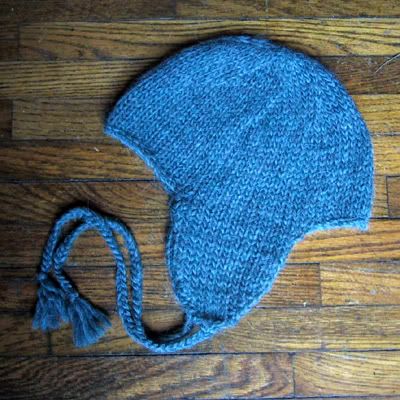 If you are looking for a basic pattern to get you started, Julie has a great Basic Earflap Hat Pattern. It calls for about 100 grams of heavy worsted weight yarn. It knits up quick and is a great place to start for designing your own earflap hat pattern.
Knitty Gritty has a Camo Earflap Hat pattern designed by The Souza family. It uses 1 skein of Lorna's Laces Shepherd Bulky in a great orange "camo" looking colorway. It is finished off with nice looking braided ties and a pom-pom.
Or if you need knit earflap hat patterns for both children and adults you may want to check out Gail Bable's Ribbed Ear Flap Hat pattern. These fun hats are knit in K3P1 stitch pattern.
Get more free hat knitting patterns including knit earflap hat patterns from the Free Knitting Patterns Online directory.
March 07, 2007
Knitting Magazine: Spring 2007 Knitty.Com
The Spring 2007 issue of Knitty.com is now available. Here is a preview of all the great free knitting patterns.
bmp - charted sock pattern
carolyn - stripped knitted cardigan
tahoe - v-neck cardigan
ribena - short sleeve top with ribbing and arm warmers
torque - asymmetry cable sweater
isabella - tank top with picot edging
ester - cable shrug
morestripes - skeeked ribbed vest
monica - girl's tank top
briar rose - girl's sweater
hey mickey - girl's pleated skirt
vestee - toddler's sweater
palette - lace scarf
dashing - men's fingerless mitt pattern
paperbag - knit bag
bauble - knit bracelet
queen of cups - lace socks
quill lace - lace anklets
clessidra - cable socks
There are also some great articles including one on dyeing yarn with food coloring, one on spinning hemp, and one loom knitting.
bmp - charted sock pattern
carolyn - stripped knitted cardigan
tahoe - v-neck cardigan
ribena - short sleeve top with ribbing and arm warmers
torque - asymmetry cable sweater
isabella - tank top with picot edging
ester - cable shrug
morestripes - skeeked ribbed vest
monica - girl's tank top
briar rose - girl's sweater
hey mickey - girl's pleated skirt
vestee - toddler's sweater
palette - lace scarf
dashing - men's fingerless mitt pattern
paperbag - knit bag
bauble - knit bracelet
queen of cups - lace socks
quill lace - lace anklets
clessidra - cable socks
There are also some great articles including one on dyeing yarn with food coloring, one on spinning hemp, and one loom knitting.
January 17, 2007
MagKnits January 2007
The online knitting magazine MagKnits has a great assortment of free knitting patterns in their January 2007 issue.
The issue includes:
Holey Cable! by Amy King - a sweater with cables running down the sleeves.
New York Hat by Marina Bekkerman - a great looking warm, quick, and well-fitting hat.
R31 by Emily Schneider - a form-fitting laptop cozy with a pocket for cables.
Waders Socks by Jennifer Young - lace sock pattern
Indian Summer Collar by Ildiko Szabo - colorful collar or wrap to spruce up a coat or a top.
The issue includes:
Holey Cable! by Amy King - a sweater with cables running down the sleeves.
New York Hat by Marina Bekkerman - a great looking warm, quick, and well-fitting hat.
R31 by Emily Schneider - a form-fitting laptop cozy with a pocket for cables.
Waders Socks by Jennifer Young - lace sock pattern
Indian Summer Collar by Ildiko Szabo - colorful collar or wrap to spruce up a coat or a top.
January 16, 2007
How To Knit Cable Purses
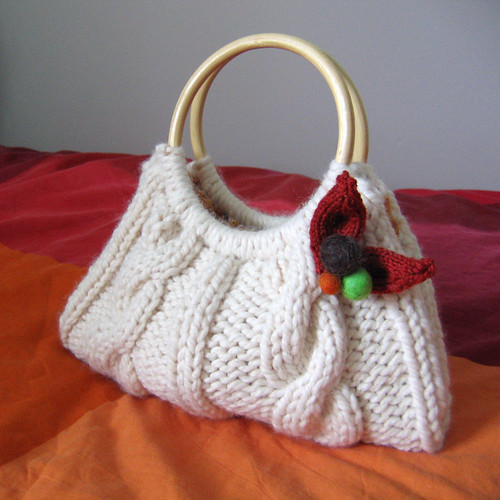
Knit cable purses make an ordinary knitted bag extraordinary. By adding a cable to a simple purse pattern, the bag goes from plain to chic.
Knit cables are often found on knitted garments such as sweaters or scarves. They offer rich texture in a way that looks complicated but isn't once you master the basics of knitting cables.
There are many cable stitch patterns that can be used on a knit purse to jazz it up. Just find a basic knit purse pattern or make up your own and then add some cables to it.
Free Knit Cable Purse Patterns
Or if you want a knit cable purse pattern, check out these two free knit cable purses:- Yarniverse has a knit cable purse pattern with two cables. The purse is whip stitched to handles when it is complete.
- Knit Picks also has a free chunky cable purse pattern on its website. The purse has two types of cables on it.
Books With Knit Cable Purse Patterns
There are a couple of great cable-oriented knitting books with each having a pattern for a knit cable bag.- Inspired Cable Knits: 20 Creative Designs For Making Sweaters and Accessories by Fiona Ellis has a knit cable yoga bag. This book has some incredible cable knits including sweaters and blankets and scarves that will keep you knitting cables for time to come.
- Cables Untangled: An Exploration of Cable Knitting by Melissa Leapman has a little bag with handles. The bag is knit with Classic Elite Yarns's Bazic which is auperwash wool worsed weight yarn. This book also has a great cable stitch pattern dictionary divided into cabled ribs stitch patterns, cabled panels, and allover cable patterns.
January 12, 2007
Blue Moon Fiber Arts Rockin' Sock Club 2007
Due to a bank's stupid, stupid decision, members of the Blue Moon Fiber Arts Rockin' Sock Club 2007 have been refunded their money for their memberships in the company's year long sock knitting club.
In a crazy decision by Blue Moon Fiber Arts' bank, who thinks that sock knitting yarn clubs must be illegitimate, the bank has refunded the money paid for the Rockin' Sock Club 2007 memberships.
Knitters around the world are outraged at this blatant discrimination against knitters everywhere. Thousands of knitters knit socks every day and sock yarn is one of the most popular types of yarn that they use.
There are tons of Sock Knitting Books out on the market and even more sock yarn available. How could this bank be so stupid to think a sock knitting club could be anything but legitimate?!?!
You can read the letter sent to Blue Moon Fibers Arts Rocking' Sock Club 2007 customers and the outrage expressed by knitters everywhere on the Yarn Harlot website.
In a crazy decision by Blue Moon Fiber Arts' bank, who thinks that sock knitting yarn clubs must be illegitimate, the bank has refunded the money paid for the Rockin' Sock Club 2007 memberships.
Knitters around the world are outraged at this blatant discrimination against knitters everywhere. Thousands of knitters knit socks every day and sock yarn is one of the most popular types of yarn that they use.
There are tons of Sock Knitting Books out on the market and even more sock yarn available. How could this bank be so stupid to think a sock knitting club could be anything but legitimate?!?!
You can read the letter sent to Blue Moon Fibers Arts Rocking' Sock Club 2007 customers and the outrage expressed by knitters everywhere on the Yarn Harlot website.
Wrist Warmer Pattern

Wrist warmers and fingerless knitted gloves are a great way to keep your hands warm while leaving your fingers free. Here is a easy free wrist warmer pattern that knits up quick and is really fun.
Finished Size
6 inches in circumference and 8 inches long
Materials
Yarn: 1 skein Buckwheat Bridge Angoras Yarn (50% Kid Mohair, 50% wool, Corpus Cristi)
Needles: Size #3 Double Pointed Needles (DPNs)
Notions: Stitch Marker, Tapestry needle
Gauge
40 sts = 4 inches in K2P2 stitch pattern
Directions
Cast on 60 stitches on size 3 DPNs. Divide stitches between needles and join to begin working in the round, being careful not to twist stitches. Place stitch marker to indicate beginning of round.
Work in K2P2 stitch pattern until work measures 6 inches.
Next Round: Bind off 7 stitches. Knit to end of round.
Following Round: Cast on 7 stitches. Knit to end of round.
Thumb hole created.
Continue work in K2P2 until work measures 8 inches.
Bind off. Using tapestry needle, weave in yarn.
This wrist warmer pattern can be modified to use any yarn for any wrist size. Check out the free wrist warmer pattern generator to make a custom wrist warmer pattern.
Subscribe to:
Posts (Atom)